









In today’s fast-changing world, financial freedom has become one of the most discussed goals. Social media is filled with promises of becoming a millionaire overnight, retiring at 30, or earning passive income while sleeping. But financial freedom is much more than luxury cars, expensive vacations, or a large bank balance.

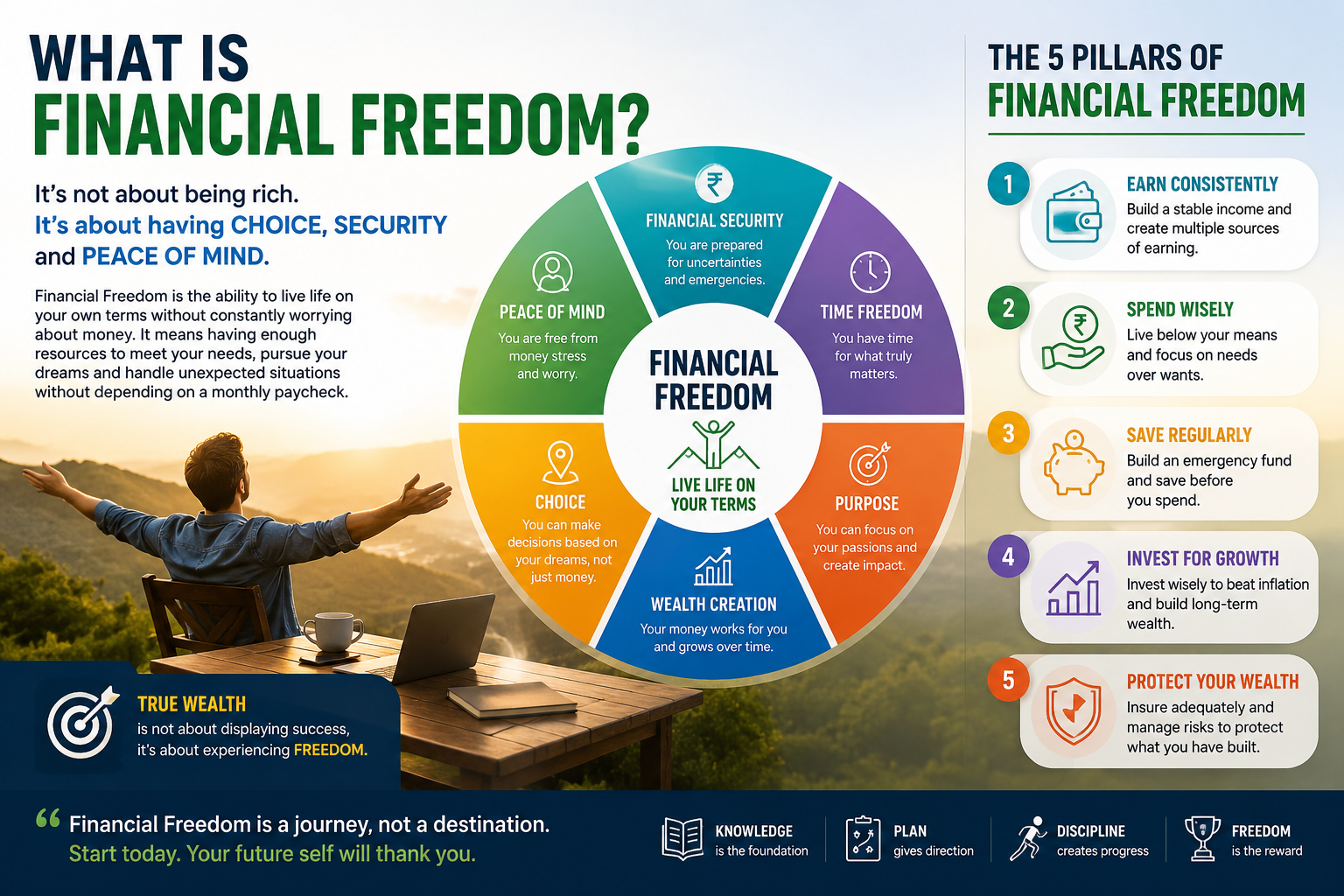
Financial freedom is the ability to live life on your own terms without constantly worrying about money. It means having enough financial resources to meet your needs, pursue your dreams, support your family, and handle unexpected situations without depending entirely on a monthly paycheck.
Simply put, financial freedom is about choice, security, and peace of mind.
It’s Not About Being Rich
Many people believe financial freedom is only for billionaires or high-income professionals. In reality, income alone does not determine financial freedom.
Consider these two individuals:
- A person earning ₹40 lakh annually but spending nearly everything, burdened with loans and credit card debt.
- Another earning ₹10 lakh annually, living within their means, investing regularly, and maintaining an emergency fund.
The second person is often closer to financial freedom because wealth is built through disciplined financial habits—not just high earnings.
Financial freedom is not measured by how much you earn but by how effectively you manage, save, invest, and grow your money.
The Five Pillars of Financial Freedom
1. Earn Consistently
Every financial journey begins with income. Whether through employment, business, freelancing, or investments, a stable source of income provides the foundation for financial growth.
However, relying on a single source of income can be risky. Developing additional income streams creates greater financial stability over time.
2. Spend Wisely
Controlling expenses is often more important than increasing income.
Responsible spending means distinguishing between needs and wants. It involves budgeting, avoiding impulsive purchases, and ensuring that lifestyle inflation does not consume every salary increase.
Small daily savings often create significant long-term wealth.
3. Save Before Spending
One of the simplest yet most powerful financial habits is paying yourself first.
Instead of saving whatever remains at the end of the month, successful individuals save first and spend the rest. Building an emergency fund covering six to twelve months of living expenses provides financial resilience during unexpected events such as job loss, illness, or business setbacks.
4. Invest for Growth
Saving protects money; investing helps it grow.
Inflation gradually reduces the purchasing power of idle cash. Long-term investments in equities, mutual funds, retirement plans, bonds, or real estate can help generate wealth that outpaces inflation.
The earlier one starts investing, the greater the advantage of compounding—the process where returns generate additional returns over time.
5. Protect Your Wealth
Building wealth without protecting it leaves financial plans vulnerable.
Adequate health insurance, life insurance, emergency savings, estate planning, and diversified investments reduce financial risks and ensure that years of hard work are not undone by unforeseen circumstances.
Financial Freedom Is a Journey
There is no fixed income level at which someone suddenly becomes financially free.
For one person, financial freedom may mean owning a debt-free home and educating their children comfortably. For another, it may mean retiring early to travel the world. For an entrepreneur, it could mean building a business that generates income without requiring constant involvement.
Financial freedom is personal. It depends on your goals, responsibilities, lifestyle, and aspirations.
The destination differs, but the principles remain the same.
Common Misconceptions
Many myths prevent people from taking the first step toward financial freedom.
“I’ll start investing when I earn more.”
The truth is that investing is a habit, not an income level. Even modest monthly investments can create meaningful wealth over time.
“Debt is normal.”
While certain loans, such as education or home financing, can be productive, excessive consumer debt often delays financial independence.
“It’s too late to begin.”
Whether you are 25, 40, or 55, the best time to improve your financial future is today.
Practical Steps You Can Take Today
You don’t need to transform your finances overnight. Small, consistent actions can create remarkable results.
- Create a monthly budget.
- Build an emergency fund.
- Eliminate high-interest debt.
- Invest regularly through SIPs or other long-term investment options.
- Increase your financial knowledge by reading books, attending workshops, or consulting trusted advisors.
- Review your financial goals every year and adjust your plan as your life evolves.
The Real Meaning of Wealth
True wealth is not about displaying success—it is about experiencing freedom.
When your finances are in order, you gain the confidence to make career choices, support your loved ones, pursue meaningful opportunities, and face life’s uncertainties with resilience.
Financial freedom allows you to spend more time doing what matters most rather than worrying about money every day.
Ultimately, financial freedom is not a destination reserved for the wealthy. It is a mindset built through discipline, patience, informed decisions, and consistent action.
The journey begins with a single step—and the best time to take that step is today.